- Introduction
- What are the "Three Sacred Treasures" of hiking? 3 essential items to get first
- How much does it cost to get the Three Sacred Treasures? Estimated costs by budget
- Basic clothing concept: Layering (wearing in layers)
- Useful items to have (for day hikes)
- It's okay not to get everything at once. Alternatives: substitutes and rentals
- Order of acquiring gear (roadmap for beginners)
- Summary
Introduction
Are you someone who thinks, "I want to start hiking, but I don't know what I need to get," or "Getting all the gear seems expensive and worrying"?
The conclusion is that you don't need to get all the necessary hiking gear from the start. First, get the three essential items for safety (hiking boots, backpack, and rainwear), and you can start with substitutes or rentals for the rest.
This article carefully explains the gear beginners should prioritize, estimated costs for each, and the order in which to acquire them. Knowing "how much things cost" should significantly reduce your worries.
What are the "Three Sacred Treasures" of hiking? 3 essential items to get first
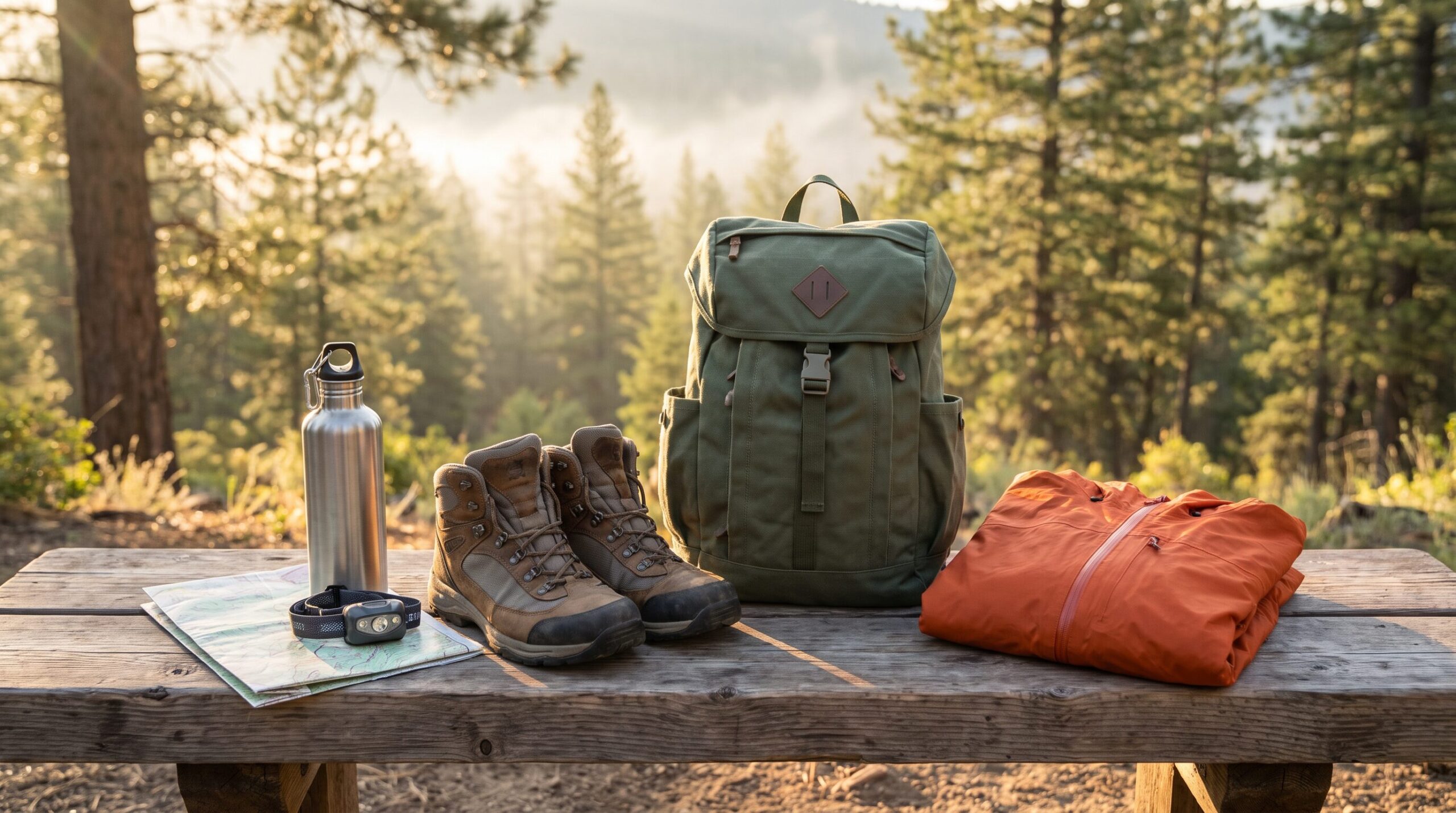
Among hiking gear, the following three are considered particularly important for safety. They are known as the "Three Sacred Treasures" among hiking stores and experienced hikers.
Hiking boots
Because you'll be walking on unpaved roads, rocky terrain, and wet ground, you need waterproof hiking boots with good grip. Regular sneakers are slippery and increase the risk of twisting your ankle. Mid-cut or higher models that firmly support your ankles are safer for beginners.
Backpack (Rucksack)
For day hikes, a capacity of around 20-30L is recommended. While you can use your everyday backpack as a substitute, carrying heavy loads puts a significant strain on your shoulders and hips. A dedicated hiking backpack that distributes weight is more comfortable for long walks.
Rainwear
Mountain weather changes more rapidly than at lower elevations, and it can rain suddenly even if the forecast is sunny. Rainwear is recommended not only as rain protection but also as a windbreaker when the temperature drops, so it should be waterproof and breathable.
How much does it cost to get the Three Sacred Treasures? Estimated costs by budget
You're probably most curious about "how much it all costs." While prices vary depending on the purpose and grade, here are rough estimates based on the actual market prices of major brands (prices vary by brand, model, and time of purchase, so please check the latest prices before buying).
| How to get them | Hiking boots | Backpack | Rainwear | Total Estimated Cost |
|---|---|---|---|---|
| First to try (cost-performance focused entry model) | ¥10,000-¥15,000 (Example: Caravan C1-02S) | ¥5,000-¥10,000 range (models not specific to hiking brands) | ¥8,000-¥10,000 range (e.g., Montbell Rain Hiker) | Approx. ¥23,000-¥35,000 |
| Standard for beginners (entry-level models from hiking-specific brands) | ¥15,000-¥25,000 (e.g., Montbell mid-cut GORE-TEX models) | ¥10,000-¥20,000 range (entry-level models from Montbell, The North Face) | ¥15,000-¥20,000 (e.g., models with GORE-TEX INFINIUM) | Approx. ¥40,000-¥65,000 |
| For long-term, serious use (high-end models) | ¥25,000~ (The overall price range for hiking boots is wide, from ¥10,000 to ¥90,000) | ¥20,000~ | ¥20,000-¥25,000 (e.g., models with GORE-TEX FABRICS) | Approx. ¥65,000~ |
For low mountains or day hikes in nearby areas, it's perfectly fine to start with entry-level models and then upgrade to more advanced ones if you decide to continue hiking.
Basic clothing concept: Layering (wearing in layers)
The basic principle for hiking attire is not to rely on a single thick layer, but to adjust your body temperature through layering. This is called "layering."
- Base Layer (closest to skin): Moisture-wicking, quick-drying material that quickly dissipates sweat. Cotton absorbs sweat and dries slowly, which can lead to hypothermia as wet clothing draws heat from your body, so it's best to avoid it for hiking.
- Mid Layer (middle clothing): Insulating material such as fleece.
- Outer Layer (outermost): Often covered by the rainwear mentioned earlier.
The key to comfortable and safe hiking is to adjust your layers by putting them on and taking them off according to the temperature and your activity level.
Useful items to have (for day hikes)
In addition to the "three essential items" and clothing, there are other things you should carry for safety.
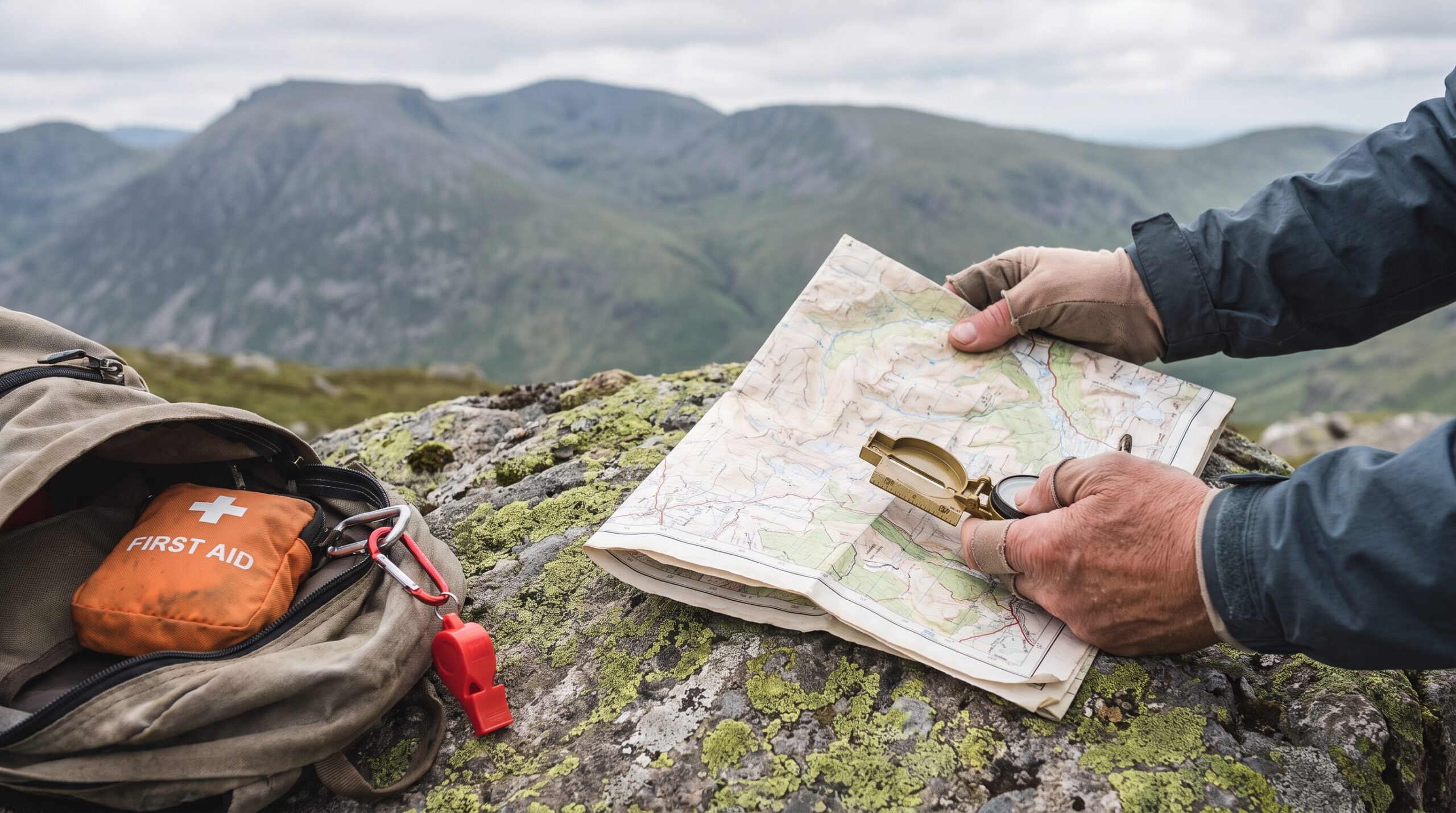
- Headlamp: Always bring one, even for day hikes, in case your descent is delayed and it gets dark.
- Hiking Map/App: Used to check your current location and ensure safety if you get lost.
- Drinks and Snacks: Hydration and food for energy replenishment during fatigue (items that can double as emergency food are recommended).
- Mobile Battery: To prevent your smartphone or headlamp from running out of power.
Many of these items can be purchased for a few hundred to a few thousand yen, so they won't be as significant an expense as the "three essential items."
It's okay not to get everything at once. Alternatives: substitutes and rentals
Many people may feel hesitant about purchasing everything from the start if they are unsure whether they will continue hiking. In such cases, please consider the following options.
- Rental Services: There are services that offer rental sets including hiking boots and backpacks. You can try hiking once or twice with rentals before considering a purchase.
- Substitute with everyday items: You can try your first hike with a regular backpack (but be aware that it will put a strain on your shoulders if you hike for a long time or carry heavy loads).
- Consider purchasing hiking boots and rainwear early: Since these are directly related to safety, we recommend consulting with a specialty store rather than using substitutes.
Order of acquiring gear (roadmap for beginners)
If you're unsure about what to get first, use the following order as a guide.
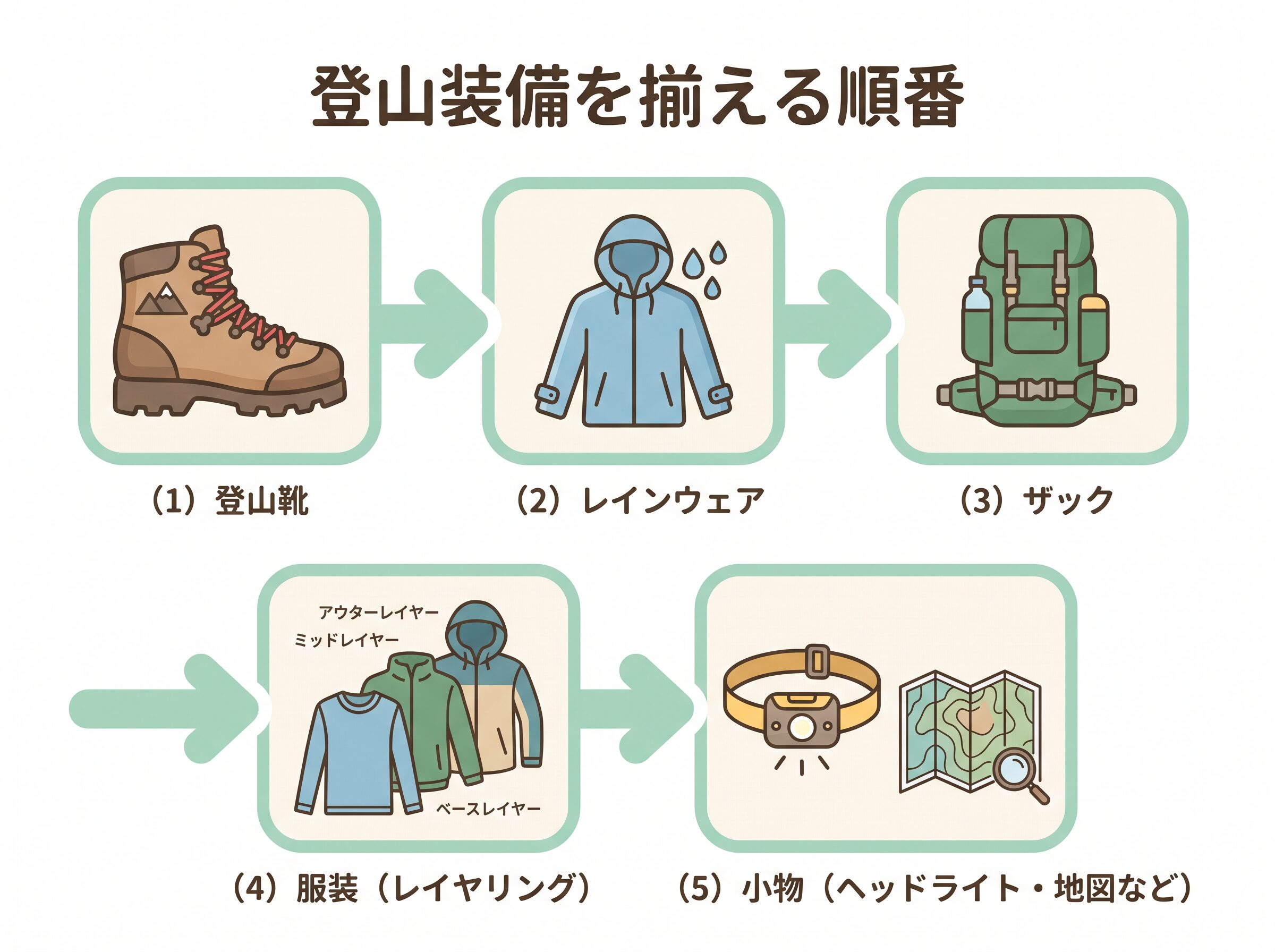
- Hiking Boots: Safety of your feet comes first. It's reassuring to choose them at a specialty store while consulting about the size.
- Rainwear: This is the next highest priority gear, as it ensures safety and provides warmth in case of sudden weather changes.
- Backpack: Depending on the amount of luggage and how often you hike, a 20-30L daypack is sufficient.
- Clothing (for layering): Substitute with moisture-wicking, quick-drying clothes you already own, and purchase more as needed.
- Small items such as headlamps, maps, and snacks: These are relatively inexpensive, so get them once you've decided on your hiking boots, rainwear, and backpack.
Summary
The top priority when starting hiking is the "three essential items" (hiking boots, backpack, and rainwear) that are directly related to safety. You can start with entry-level models according to your budget, with an overall estimated cost of around ¥20,000 to ¥60,000. You can gradually acquire other small items and clothing by using substitutes or rentals.
First, try hiking at nearby low mountains or well-maintained hiking courses within your limits.